Born on this grass, raised by it.
Our flock is Katahdin sheep: calm, hardy mothers built for a life outdoors, not a show ring. Every lamb here was born on this farm between January and March, and has eaten nothing but its mother's milk and this pasture since.
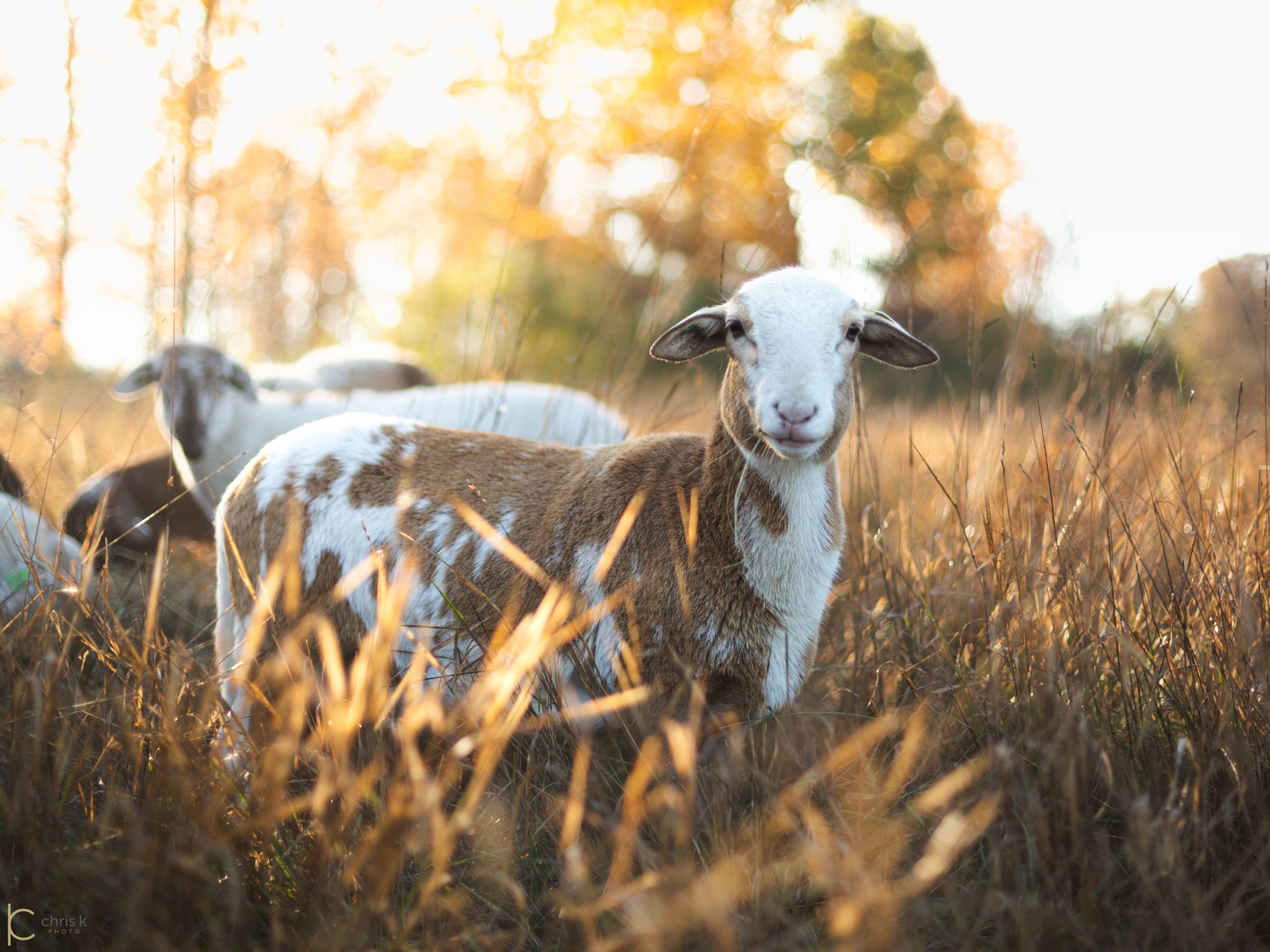
Every 2026 lamb was sired by Cliff.
Cliff was our Katahdin ram: big, calm, and good at his job. He sired every lamb born here this year, and he has since been sold.
HOW WE FARM · THE SHORT VERSION
Katahdins are hair sheep built for a life lived entirely outdoors, and ours live one: fresh grass every 1-3 days, guardian dogs day and night, no grain, no soy and no hormones, ever. When an animal needs care, including deworming, it gets it, and every bit of it is written into its passport. The breed's whole story is one page over.
Flavor is a record, too.
Real Food. Grown Wild. is not a slogan on a label. It is the whole process, and the process is what you taste. Five reasons this lamb eats like nothing from a grocery case:
The sward writes the flavor
Our lambs eat their way across nineteen kinds of pasture plants: chicory, white clover, plantain, orchardgrass, plus the native grasses, the volunteer weeds, and the browse along the woodline that they help themselves to. Ours tastes like this ground.
The mild lamb
Hair sheep like ours are widely prized for lamb that eats milder and cleaner than the wooled breeds. The strong taste people remember from bad lamb is a trait we simply don't raise. If lamb never won you over, ours is the one to try.
Calm to the last minute
Stress before slaughter sours the meat. It comes out darker and tougher, and that is chemistry, not opinion. That is why ours are harvested at home and never trucked anywhere, as you'll read below.
An ocean fresher
Most of the lamb in American stores is imported, much of it from Australia, weeks and an ocean from its pasture. Ours never leaves the farm alive: pasture, on-farm harvest, an 8-14-day dry age, your freezer. The whole chain fits on one passport.
Aged and cut like it matters
A true 8-to-14-day dry age concentrates flavor and tenderizes the meat. Retail lamb rarely gets one. Then it's cut to your sheet, not to a store's shelf plan, and priced on a certified scale.
Grass-sweet and clean, mild top to bottom, with a green herbal edge of chicory in the finish. That's not ad copy; it's what this season's sward should hand you. Your share's passport carries the actual diet behind it.
The whole life happens on this ground.
Our lambs are born outdoors on winter pasture, in shelter, in the January snow, and raised on their mothers' milk and this ground. They never leave it. No trailer, no auction barn, no strange kill floor at the end.
On harvest morning the flock is grazing like it's any other day. No roundup, no loading, no panic. A lamb's last morning looks exactly like every morning before it.
The harvest itself is done by Northern Path MeatWorks, a Michigan mobile butchery whose whole trade is a humane, low-stress, on-farm harvest. They come to the animal, not the other way around. The same hands then dry-age the meat 8-14 days and cut it to each family's sheet, ready for the freezer. It is a small operation whose respect for animals runs as deep as ours.
It's truly the best life we can give them before their sacrifice, and their sacrifice is our burden. We choose to carry it.