How we farm.
Every animal page on this site gives you the short version. This is the rest of it. Three species share one rotation here: the cattle graze first, the sheep follow, and the hens work behind them all, over nineteen kinds of pasture plants and the browse along the woodline. Read what pulls at you. The passports back up every word.
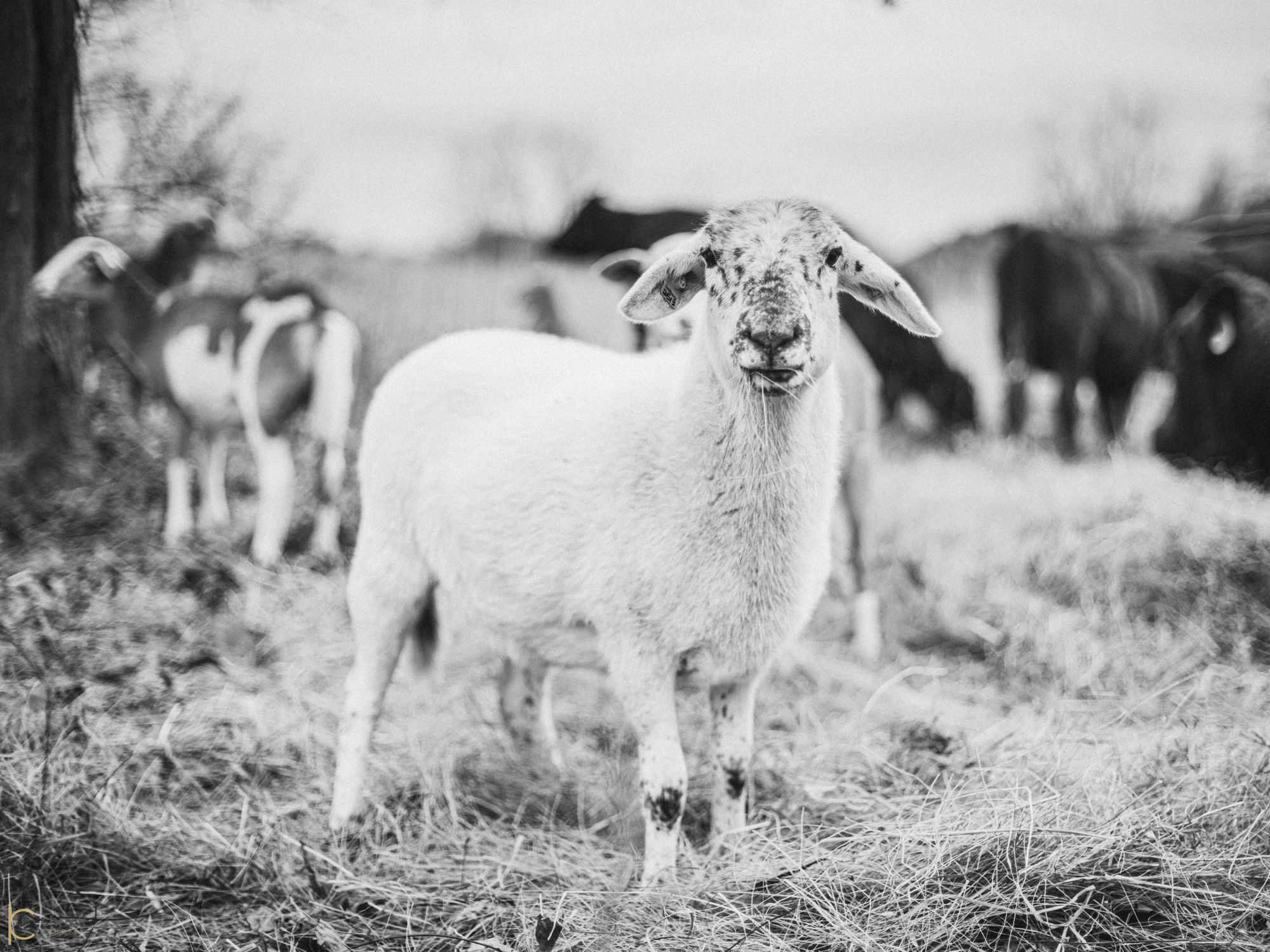
The cattle
PASTURE BUILDERSCattle aren't loners.
They make friends, groom each other, hold their place at the water tank, and graze beside their mothers for years. A herd is a social world, and breaking one apart at an auction barn breaks the animal too, weeks before it ever reaches a strange kill floor. Ours stays whole: one herd, together, on ground it knows. The mothers came here from one farm, together with Cladd, our bull, and they have stayed one family since. Every 2025 and 2026 calf was born on this ground.
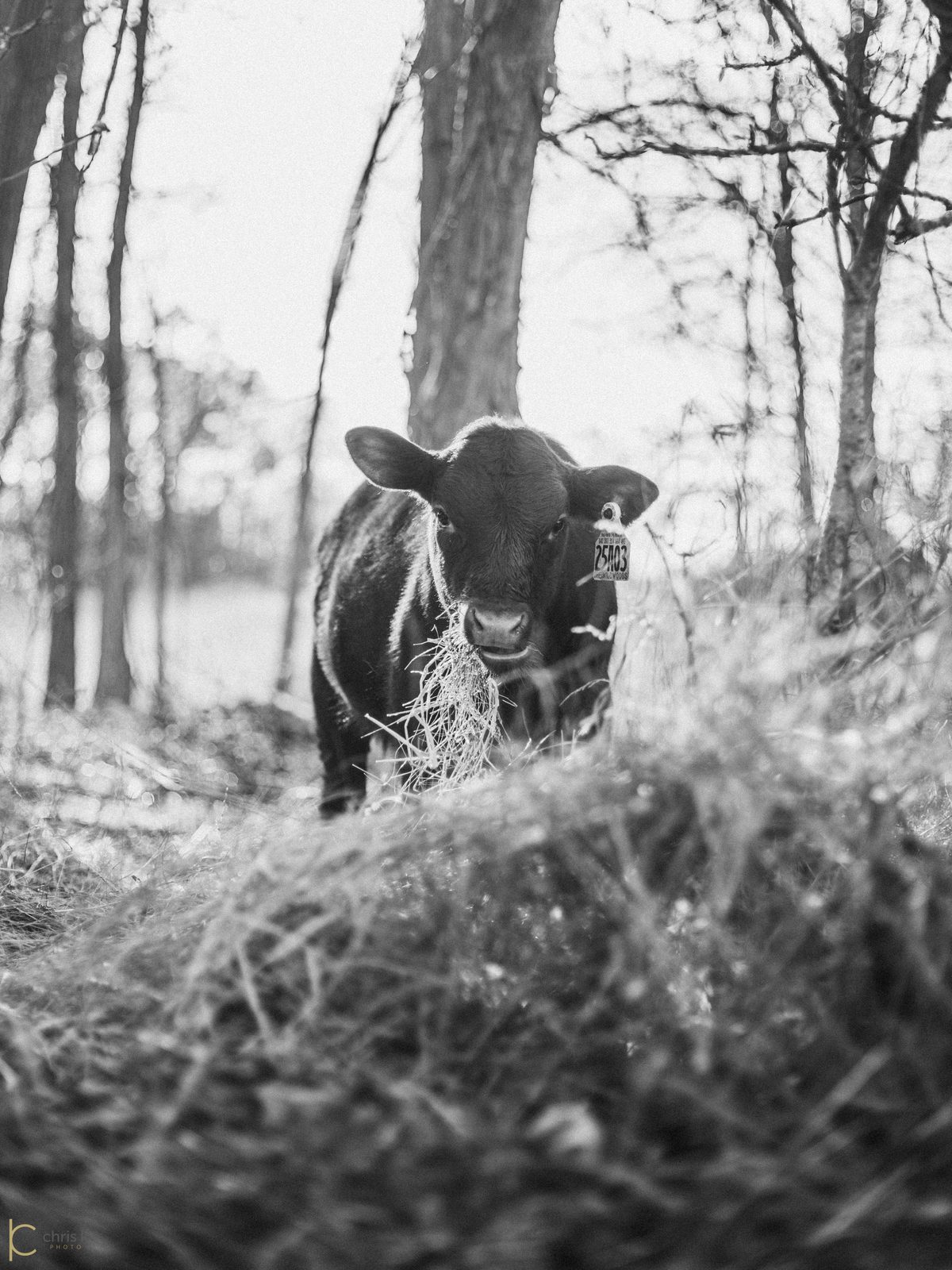
Three years behind the Mayflower.
Our herd is Red Devon, the ruby red cattle of Devon's hills in southwest England and one of the oldest beef breeds on earth. In 1623 the ship Charity landed one bull and three heifers at Plymouth, the colony's first cattle, three years behind the Mayflower. Devon oxen went on to break New England's fields and pull wagons west on the Oregon Trail.
Four centuries of that work built what old stockmen call an easy keeper: calm, deeply maternal, long-lived, able to thrive on rough forage and finish on grass alone. No grain required, which is convenient, because no grain is the rule here. We didn't choose Devons for the color. We chose them because everything about the breed says grass.
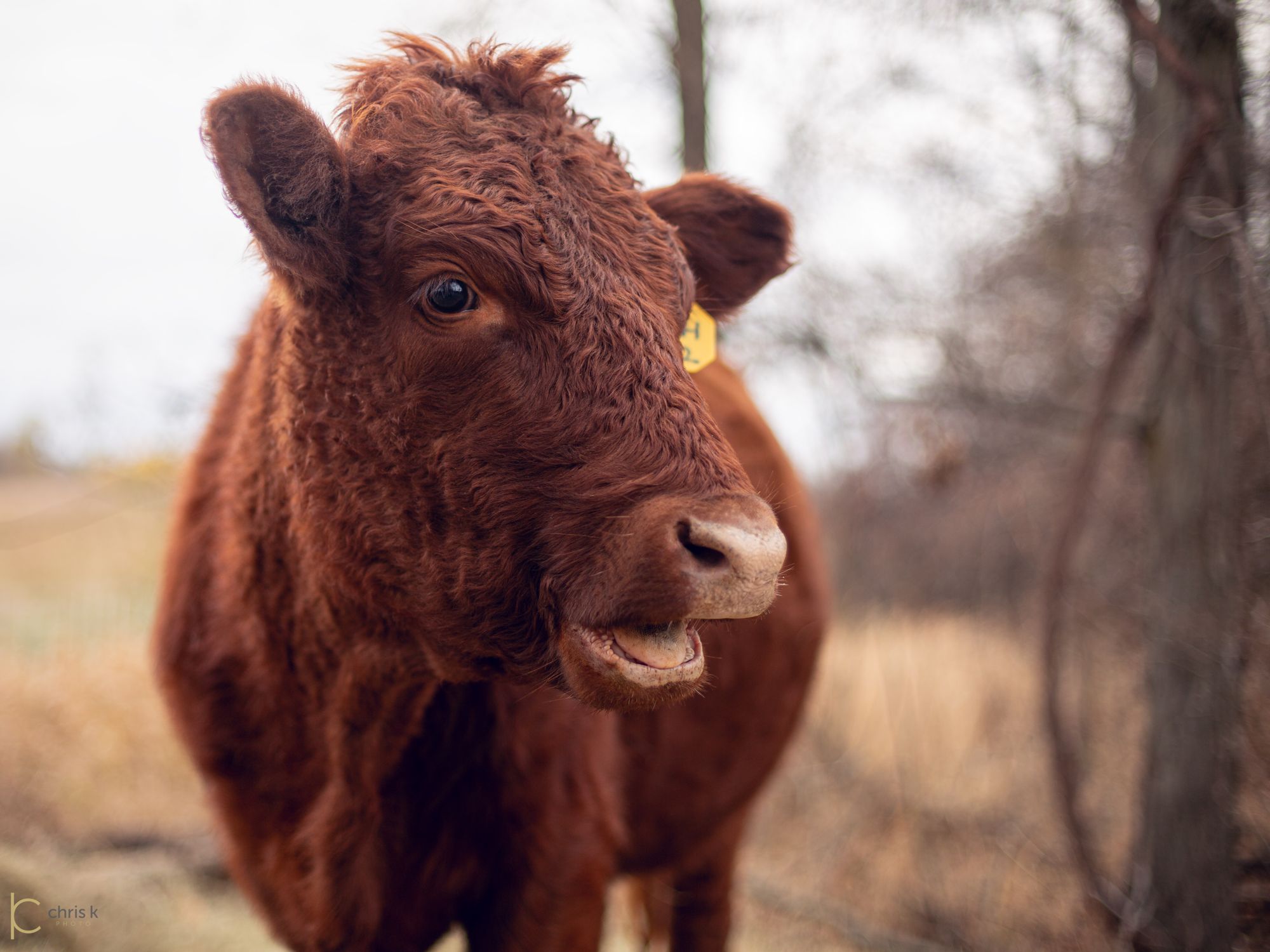
A cow's life, the way it was built to run.
Mothers, calves, and companions stay together. The herd keeps its friendships and its order, and calm runs through the whole system because of it.
Cattle graze first in the rotation: big pressure, big fertility, deep recovery behind them. They are building the pasture everything else here stands on.
No grain, no routine synthetics, no hurry. Beef takes the time it takes on pasture, and we give it that time on purpose.
Slow is the recipe.
Born here
Into the herd, on this ground. Day one is a pasture, not a pen.
Raised by the rotation
Fresh ground every few days, the whole herd together, mothers and calves side by side.
Grown on grass and time
Pasture, forest browse, Icelandic kelp, and honest rest. No grain, no hurry, season after season.
First call goes out
Lamb and egg share families hear first, then the list below, in the order names went on it.
Shares open
Capped to what the ground can raise, every animal with its living passport. This page becomes a roster of real cattle.
Two summers. Sometimes three.
Most beef, even good grass beef, is processed at 18 to 20 months. Ours won't be. Devons are moderate framed and keep laying down real muscle and marbling on forage alone, so our steers grow out to roughly 24 to 30 months: another grazing season for the fat to build inside the muscle, where flavor and tenderness live.
And older isn't the goal. Finished is. We read the animal, not the calendar: fat filling in around the tailhead, ribs disappearing under cover, fullness over the loin. A steer that needs more time gets the spring flush, when fresh grass puts on the cheapest, cleanest gain there is, and comes off in early or midsummer, truly ready.
Pasture beef, not just grass.
Grass is only the start. The herd grazes the same wild variety as everything here: nineteen kinds of pasture plants, native grasses, volunteer weeds, and the browse along the forest edge. That's why we call it pasture beef. It tastes like all of it, not like one thing in a trough.
For the minerals Michigan ground can't supply, the herd gets Thorvin kelp: Ascophyllum nodosum seaweed harvested from Iceland's clean, cold waters and dried gently with the island's own geothermal heat, which locks in its minerals and vitamins. Certified organic, straight from the sea, and the cows help themselves as their bodies ask for it. thorvin.com ↗
Feedlot beef finished on grain runs heavy on omega-6 fats, the balance most of us already get too much of. Beef raised on living pasture runs meaningfully richer in omega-3s. Same species, different fat, and the difference is everything the animal ate.
Grain makes beef heavy and one-note. Pasture keeps it deep, clean, and honestly beefy, with golden fat that carries the pasture in it. And calm matters most of all: stress before slaughter darkens and toughens beef so reliably the industry has a name for it, dark cutting. Calm is the tenderest thing you can give a steer.
Same animal. Different life. Different beef.
Six lines is the whole argument. Everything else on this page is the detail.
The sheep
BORN ON THIS GRASSA sheep named after a mountain.
Katahdins are a young American breed built on an old idea. In the 1950s a Maine farmer named Michael Piel set out to breed a sheep that could live entirely outdoors: tough Caribbean hair sheep crossed with sturdy wool breeds, and he named the result for Mount Katahdin, the highest peak in his state.
A Katahdin never needs shearing; it sheds its winter coat in spring the way a deer does. It mothers fiercely, thrives on rough forage, and takes a Michigan January on pasture in stride. We didn't choose Katahdins for a look. We chose them because everything about the breed says outdoors.
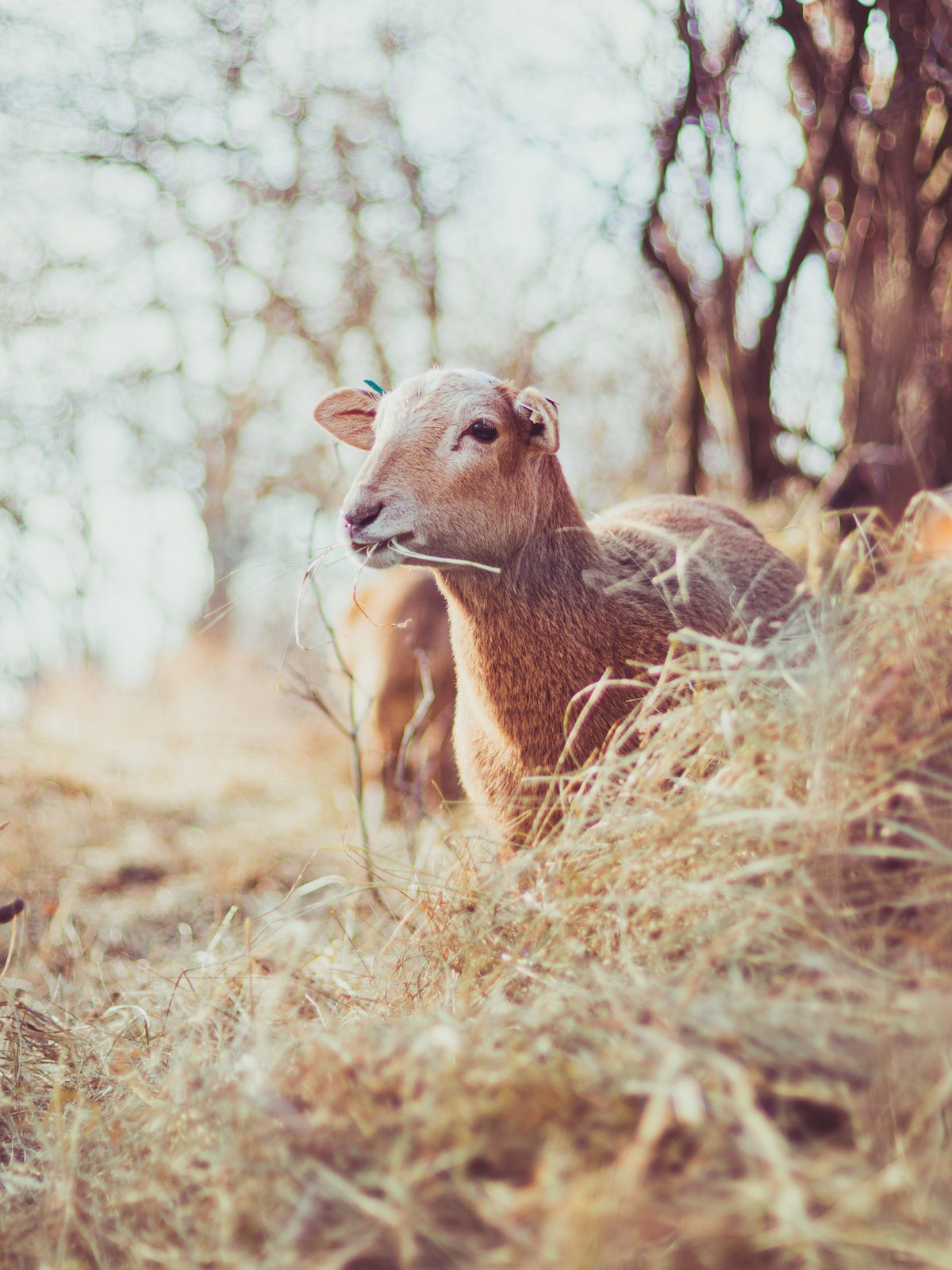
A sheep's life, the way it was built to run.
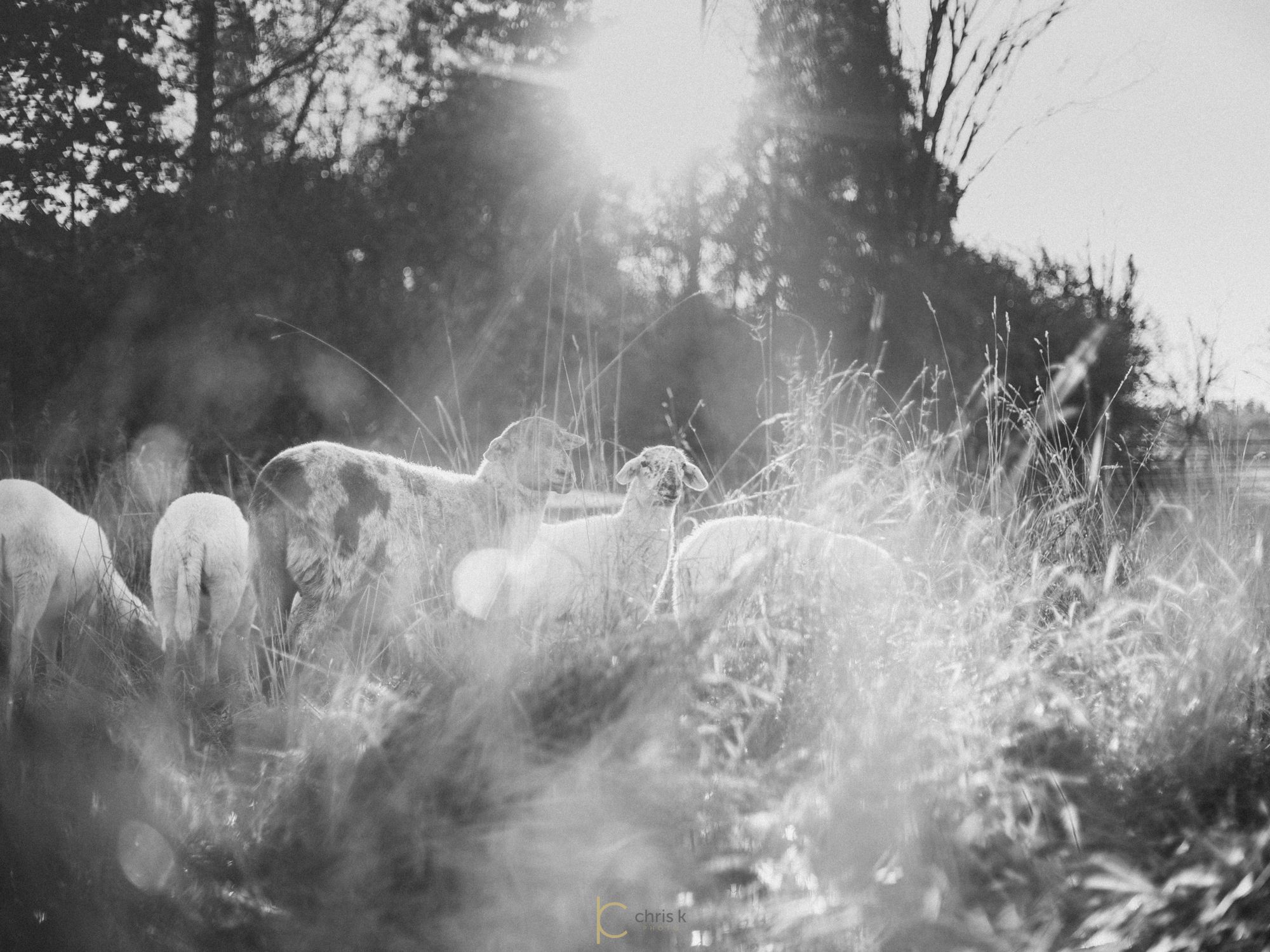
The flock moves to fresh grass every 1-3 days, eating the best of it and leaving the rest to feed the soil. They never stand in yesterday's mess.
No hormones, no grain, no soy. Health starts with fresh ground and honest rest, and when an animal needs care, it gets it, written into its passport.
Guardian dogs live with the flock day and night. Calm sheep are safe sheep, and calm is part of what you taste in the end.
Variety is the whole flavor.
Nineteen kinds of pasture plants: chicory, clovers, ryegrasses, plantain and more, plus the wild stuff sheep were built for: native grasses, weeds, and the browse along the woodline. No grain, ever. A sheep eating fifty different things tastes nothing like a sheep fed one.
Grain makes lamb heavy. Grass keeps it clean and mild. And stress before slaughter sours meat, darker and tougher, and that is chemistry, not opinion. Ours are harvested with respect, right here on ground they know.
The hens
THE LIVING FLOCKTwo breeds, one blue carton.
Cream Legbar
An English heritage breed with a feathered crest and a serious knack for foraging. Active, alert, happiest working ground, and they lay eggs in a soft sky blue.
Whiting True Blue
A modern American layer bred from Ameraucana stock for one thing done well: large, vivid blue eggs, laid steadily, from a bird that still loves to range.
Pasture first. Then the best feed we could find.
The flock follows the cattle and sheep through the rotation, scratching through what the herd leaves, cleaning up insects, spreading fertility as they go. It's the job chickens were built for. What pasture doesn't cover, their feed does: a certified-organic, soy-free layer ration. The flock has eaten soy-free since it was 18 weeks old, before its first egg was ever laid, and it stays that way.
A Michigan Centennial Farm using certified-organic methods since 1991. They grow their own grains and blend the feed right on their farm, certified by the Global Organic Alliance, about forty minutes from our gate. raubraefarm.com ↗
What you're actually paying for.
A supermarket "organic" dozen runs about $9, from a barn of hybrid hens bred to out-lay everything that walks. Ours costs about the same, and it is not the same egg. Here's the honest math behind the price.
Soy-free & certified organic
Organic feed costs 40-60% more than commodity feed, and soy-free costs more still. Ours is grown and blended at Raub-Rae, a Michigan family farm forty minutes away, not a nameless bag from a mill you'll never see.
Bred for blue, not volume
Cream Legbar and Whiting True Blue lay 180-250 eggs a year. A factory hybrid is pushed past 300. Fewer eggs per hen is the honest price of a bird that still forages, ranges, and thrives. It's why our cost per dozen is real, not padded.
Forage is the flavor
The flock ranges fresh pasture freely: bugs, seeds, greens the whole day. That's what turns the yolk deep orange. Giving them clean ground to roam is real work, every week.
Watched, not medicated
A small flock, gathered by hand every single day, with no routine medication, just closer attention when something's off. That kind of care doesn't scale to a warehouse, and we don't want it to.
Blue-shelled, pasture-raised, soy-free, from a flock you can name and check in on any morning through its living passport. That is what your WildWoods dozen pays for.
The guardians
ON DUTY, DAY AND NIGHTFour dogs, no days off.
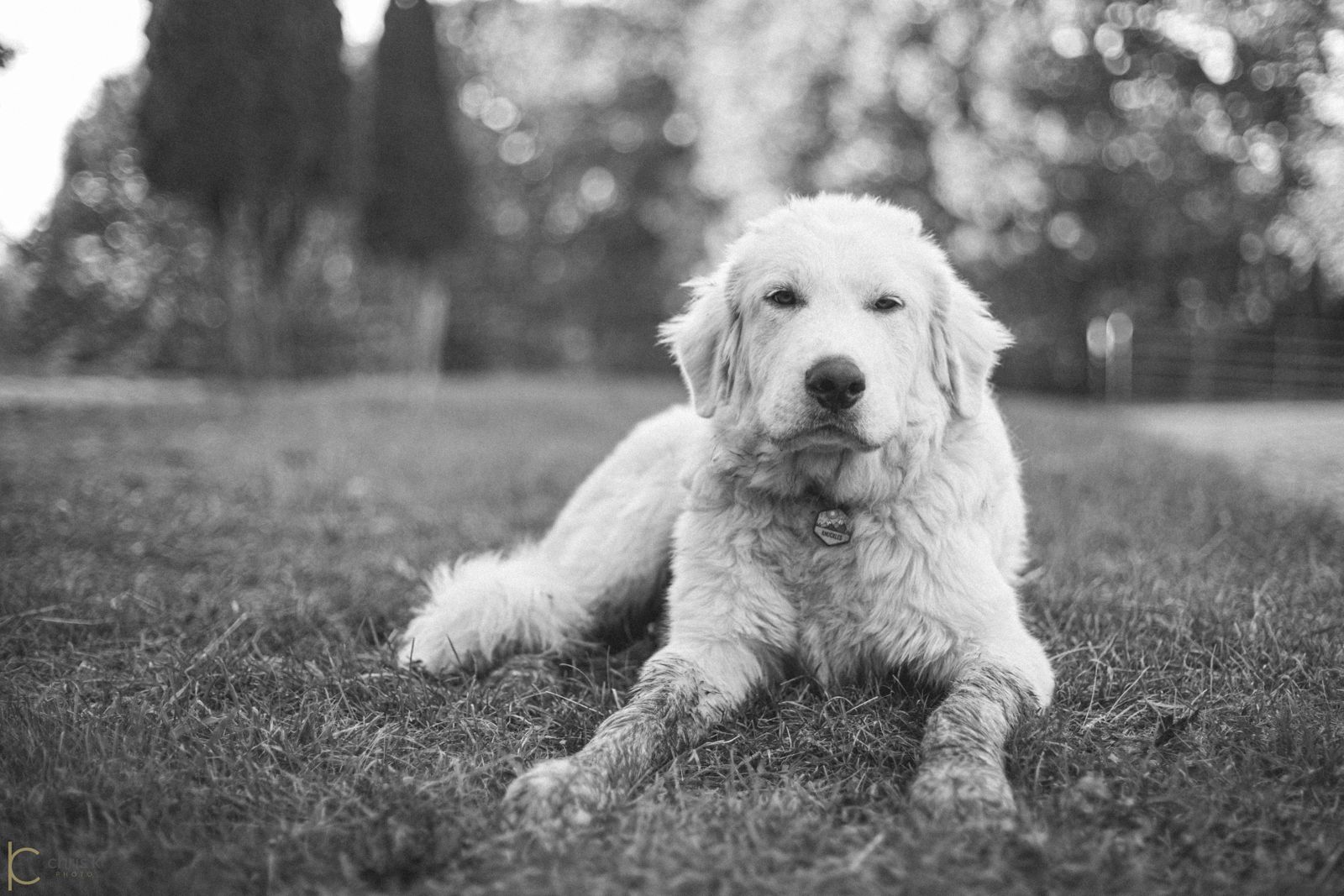
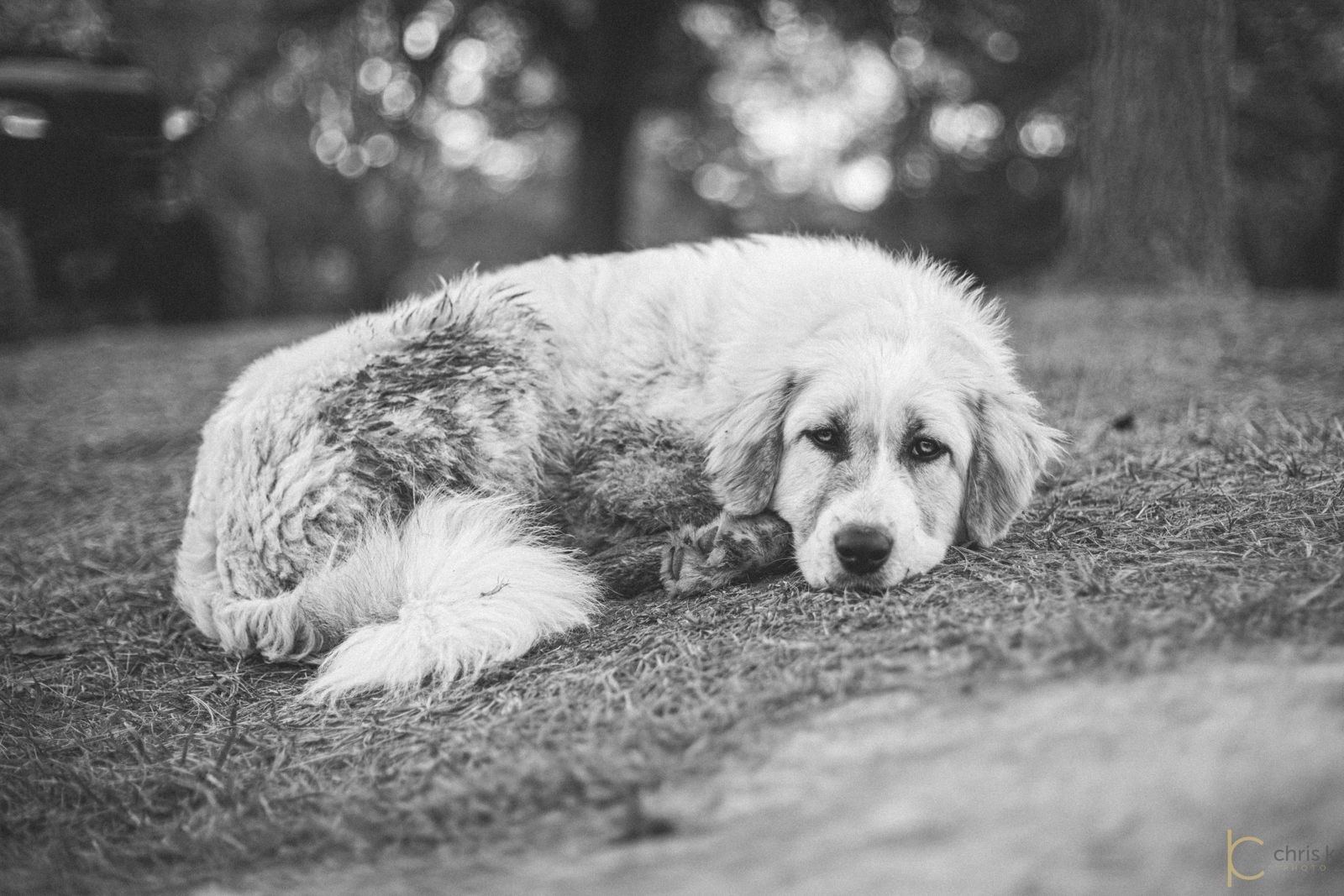
Can, Knuckles, Echo, and Garmr live with the flock, not with us. Born to the work and bonded to the sheep, they are on duty through every night of the year, and nothing on this farm gets studied harder than a strange sound in the dark.
They're guardian breeds through and through. Can and Knuckles are Great Pyrenees and Karakachan, both white: Knuckles looks every inch the Pyrenees, while Can wears her Karakachan side. Echo and Garmr carry Anatolian, Akbash, and Great Pyrenees: Garmr took the Anatolian, black and white tiger stripes and all, and Echo came out fluffy as a Pyrenees but held onto her parents' black and white.
The dogs are why the flock sleeps on open pasture instead of locked in a barn. Calm sheep are safe sheep, and calm is part of what you taste in the end. They write nothing down, but every quiet morning is their record.
It ends where it lived.
Harvest happens here, on the ground the animal has known its whole life. The crew comes to the animal, not the other way around: no trailer, no auction barn, no strange kill floor. The rest of the herd is grazing the next pasture over, and a last morning looks exactly like every morning before it.
The same hands dry-age the meat 8-14 days and cut it to order. It's the slowest, most deliberate way to do this work, and it's the only way we'll do it.
If it matters here, it's written down.
Every animal on this farm carries a living passport from the day it's born: its ground, its moves, its feed, its care, written straight from the working record and updating as the season moves. Nothing on this page asks for your trust. It shows its work.
Taste the way we farm.
The same ground, the same standard, ready now: four lamb shares for November 4 and weekly blue-egg shares.